








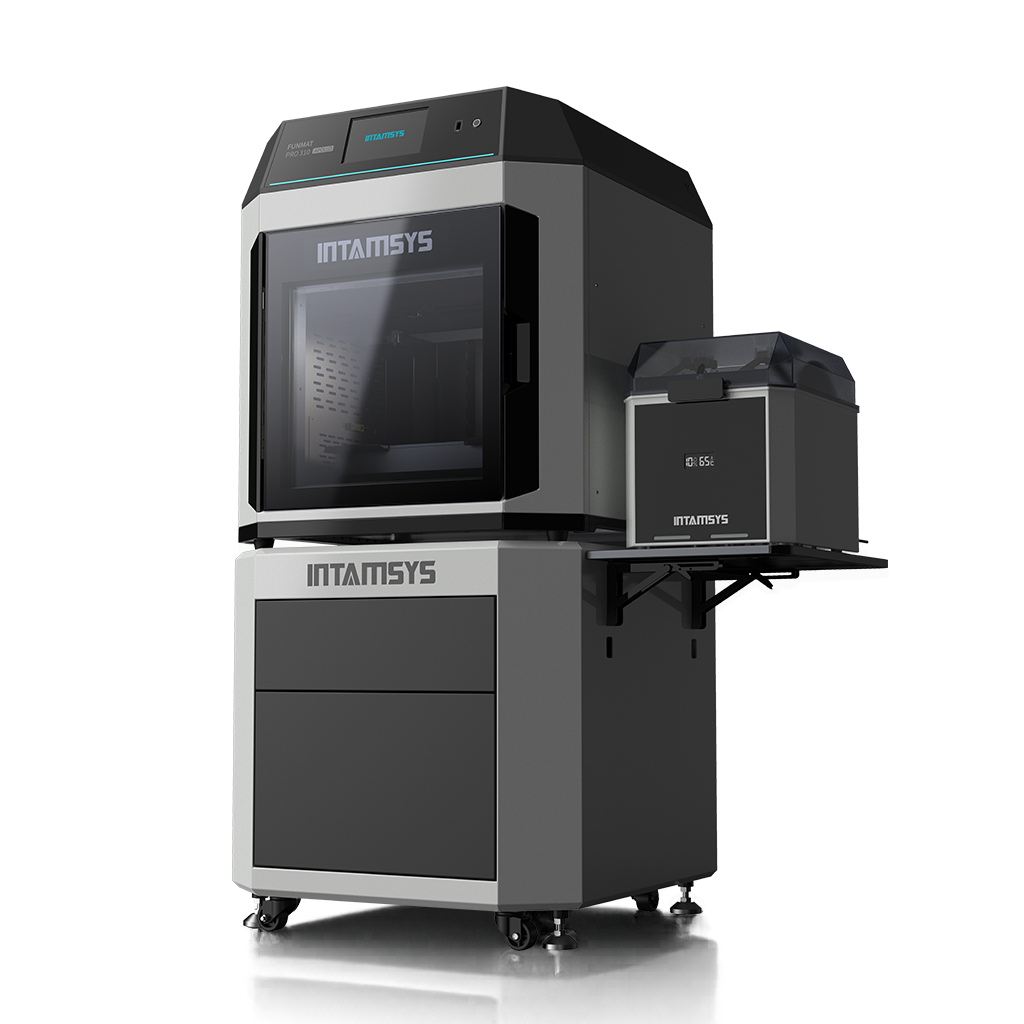
FUNMAT PRO 310 APOLLO
For repeated PEEK and PEKK jobs that require higher throughput, automated material handling and production traceability.
Build a controlled PEEK printing workflow around the right material, thermal process, printer, support strategy and quality requirements, from application development to continuous production.
Compare systems by part size and production goal.
Explore PEEK, PEEK-CF and PEEK-GF workflows.
Explore PEEK solutions for demanding industrial parts.
Discuss your application with an engineer.
The Complete Process
An industrial PEEK 3D printing solution combines a PEEK-capable FFF printer with the appropriate material, drying process, thermal control, build strategy, support material, software and quality workflow.
Select the appropriate PEEK, PEEK-CF, PEEK-GF or PAEK grade for the operating environment and required part performance.
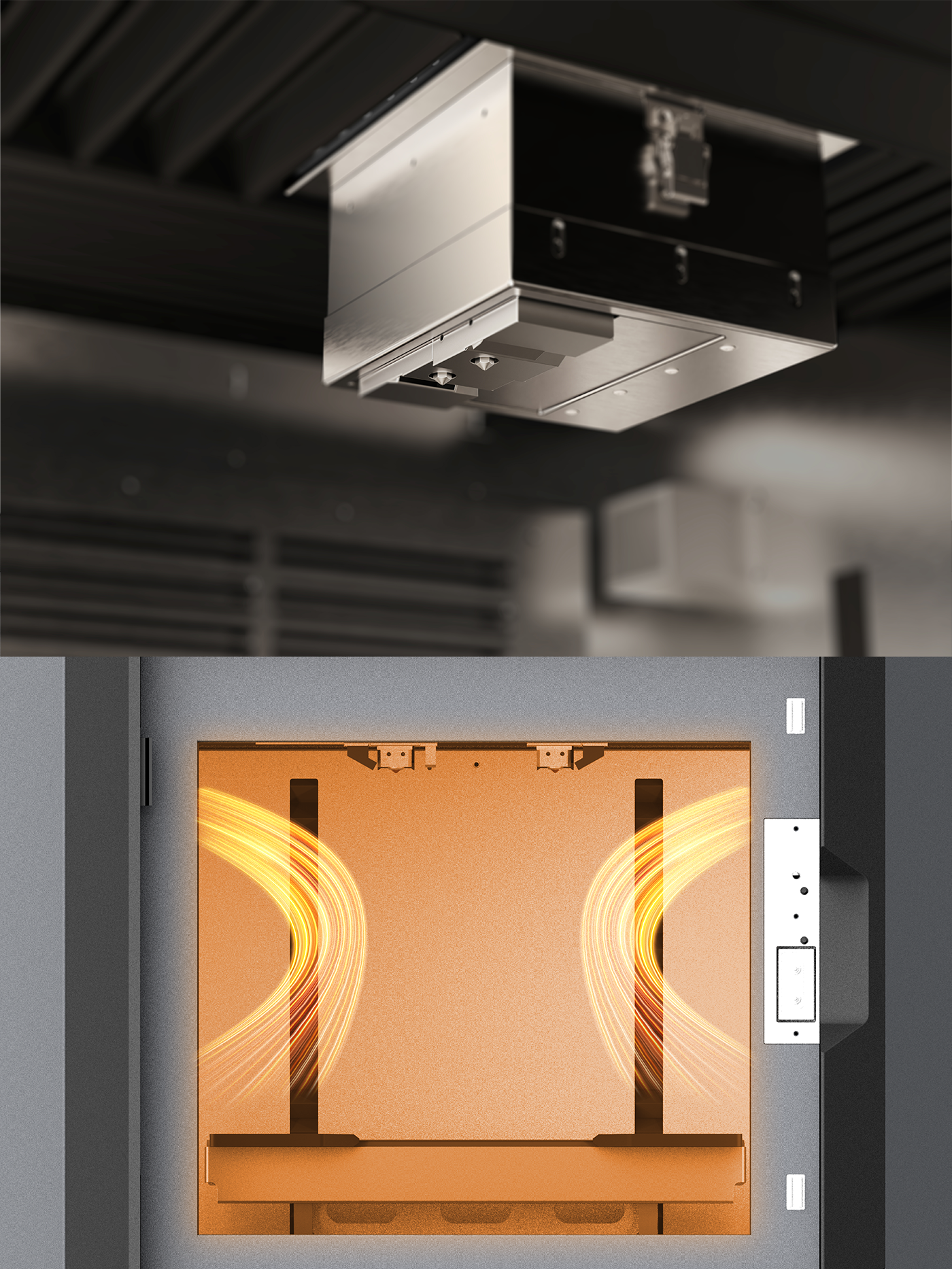
Coordinate extrusion, build plate, chamber, airflow and cooling conditions to manage thermal gradients and crystallization.
Match build volume, extrusion architecture, support capability and production throughput to the intended parts.
Control drying, orientation, toolpaths, support, cooling and post-processing as one connected manufacturing workflow.
Monitor process conditions and connect material, printing and inspection data for repeatable production.
Reliable PEEK parts depend on the interaction between material, equipment and process control . Reaching the extrusion temperature alone does not ensure dimensional accuracy, interlayer strength or production consistency.

Reliable PEEK parts depend on a controlled thermal environment, material conditioning and a repeatable process, not nozzle temperature alone.
A controlled chamber should minimize temperature gradients across both the part and the usable build area. Uneven thermal conditions can contribute to corner lift, warping, cracking and dimensional variation, particularly in larger or thicker PEEK parts.
Previously deposited layers must remain within an appropriate thermal window to support molecular diffusion between layers. Extrusion temperature, chamber conditions, layer time, airflow and part orientation all influence Z-direction performance.
Heating, deposition, cooling and post-processing affect the crystallinity of printed PEEK. The appropriate strategy depends on the material grade, part geometry, required mechanical properties and dimensional tolerances.
PEEK filament must be dried according to the supplier’s recommendations and protected from moisture during storage and printing. Long builds and repeated production may require active drying, stable feeding and material identification.

For repeated PEEK and PEKK jobs that require higher throughput, automated material handling and production traceability.
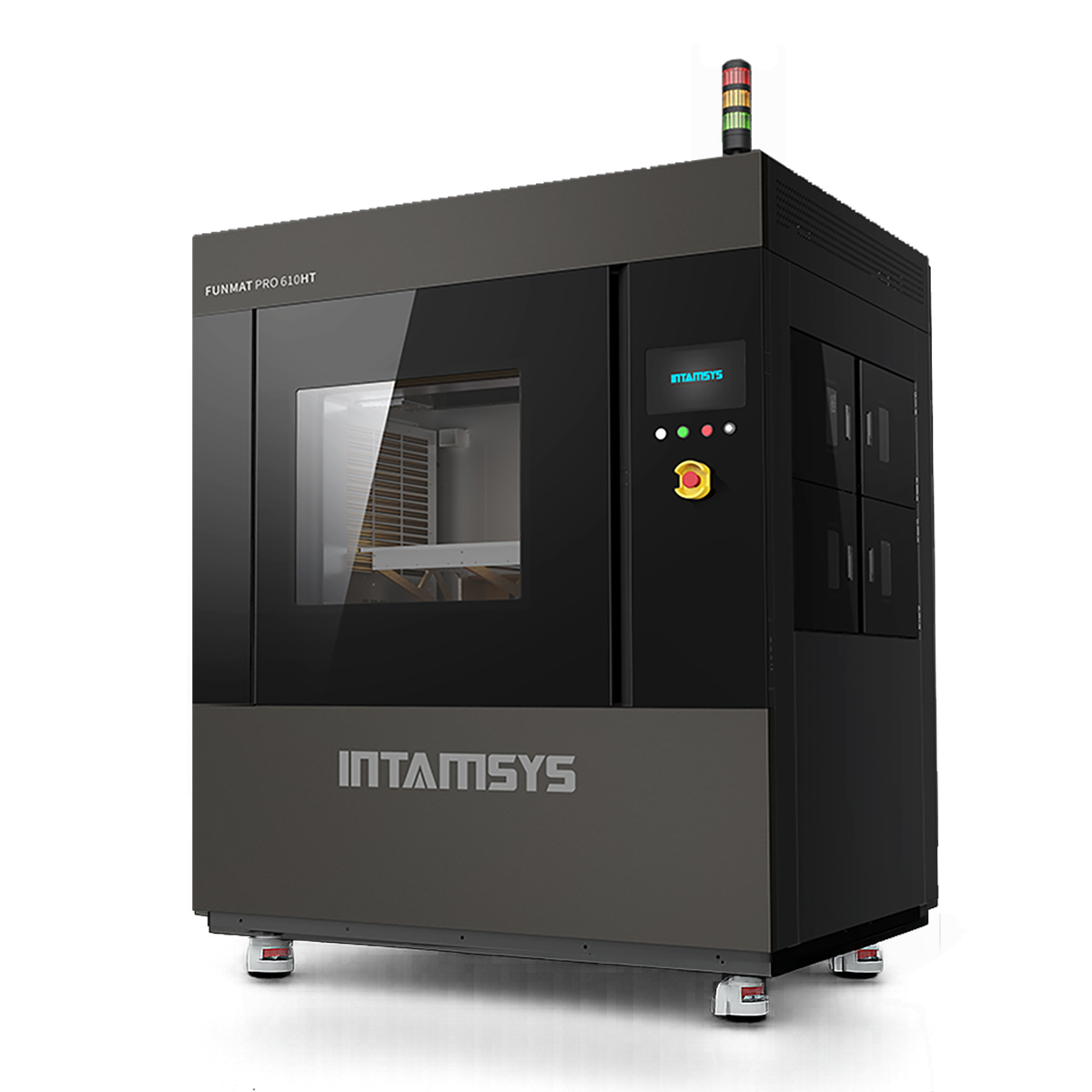
For large PEEK and PAEK parts that require a fully heated chamber, thermal uniformity and controlled high-temperature processing.
.png)
For industrial PEEK parts with complex geometries that benefit from dedicated support materials and dual-extrusion capability.
.png)
For research, material evaluation, functional prototyping and organizations beginning to bring PEEK printing in-house.
INTAMSYS brings together industrial PEEK 3D printers, PEEK-family materials, printing profiles and application support to reduce the complexity of building a reliable PEEK printing process.
Use PEEK where conventional polymers cannot meet the operating environment—and where digital manufacturing can reduce tooling, lead time or part count.

Lightweight functional parts, ducts, brackets and low-volume high-performance components.

Heat-resistant prototypes, custom connectors and lightweight low-volume parts.

Low-outgassing fixtures, precision tooling and chemically resistant production aids.

Corrosion-resistant components, fluid-handling parts and high-temperature replacements.
See how PEEK and PEEK-family materials support functional validation, high-performance aerospace parts and scalable industrial production.
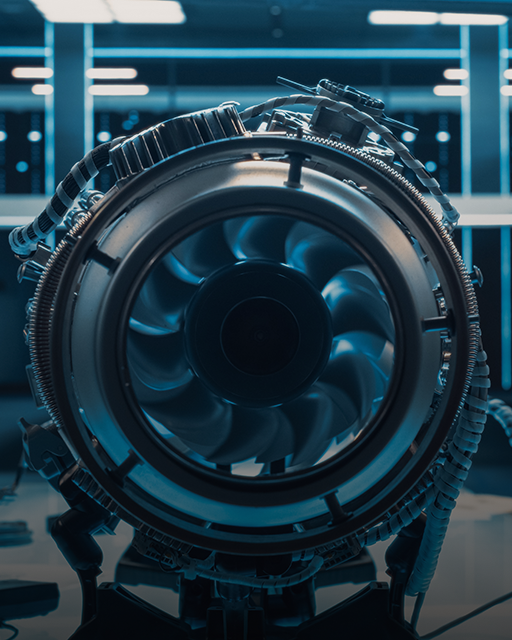
Rotechnic used industrial FFF 3D printing to produce PEEK fan components within hours, accelerating functional testing and design validation compared with conventional manufacturing.
Discover how Terrestrial X rapidly scaled its additive manufacturing capabilities with INTAMSYS 3D printers, achieving operational excellence for critical industries in just one year.
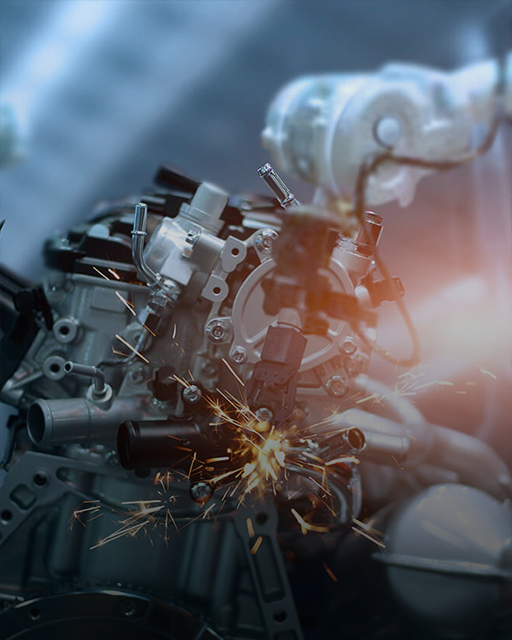
Discover how MCT Engineering enhances motorsport manufacturing with the FUNMAT PRO 610HT, integrating advanced 3D printing for improved design control, efficiency, and production capabilities.
Optimize landing and website pages or start from scratch.
Tell us what you need to print. Our team can recommend the right equipment, material and validation approach for your application.
An industrial PEEK 3D printing solution combines a PEEK-capable FDM or FFF printer with the appropriate material, drying process, thermal control, build strategy, support option and software workflow. Reliable PEEK printing depends on how these elements work together, not only on maximum nozzle temperature.
PEEK is difficult to 3D print because its high processing temperature, semi-crystalline structure and thermal contraction create a narrow process window. Inadequate control can contribute to warping, cracking, dimensional variation, inconsistent crystallinity and weak interlayer bonding.
Evaluate the supported PEEK grade, extrusion capability, build plate, chamber stability and uniformity, usable build volume, filament drying, support strategy, monitoring and application support. A high maximum nozzle temperature alone does not ensure reliable PEEK printing.
No. The appropriate thermal conditions depend on the material grade, printer, part size, geometry, build orientation, required properties and post-processing strategy. Chamber stability and temperature uniformity are also important, so one temperature threshold cannot guarantee success for every PEEK part.
INTAMSYS provides printing systems and workflows for unfilled PEEK, PEEK-CF and PEEK-GF, as well as related high-performance polymers such as PEKK. Compatibility and recommended settings should be confirmed for the selected material grade, printer and part requirements.
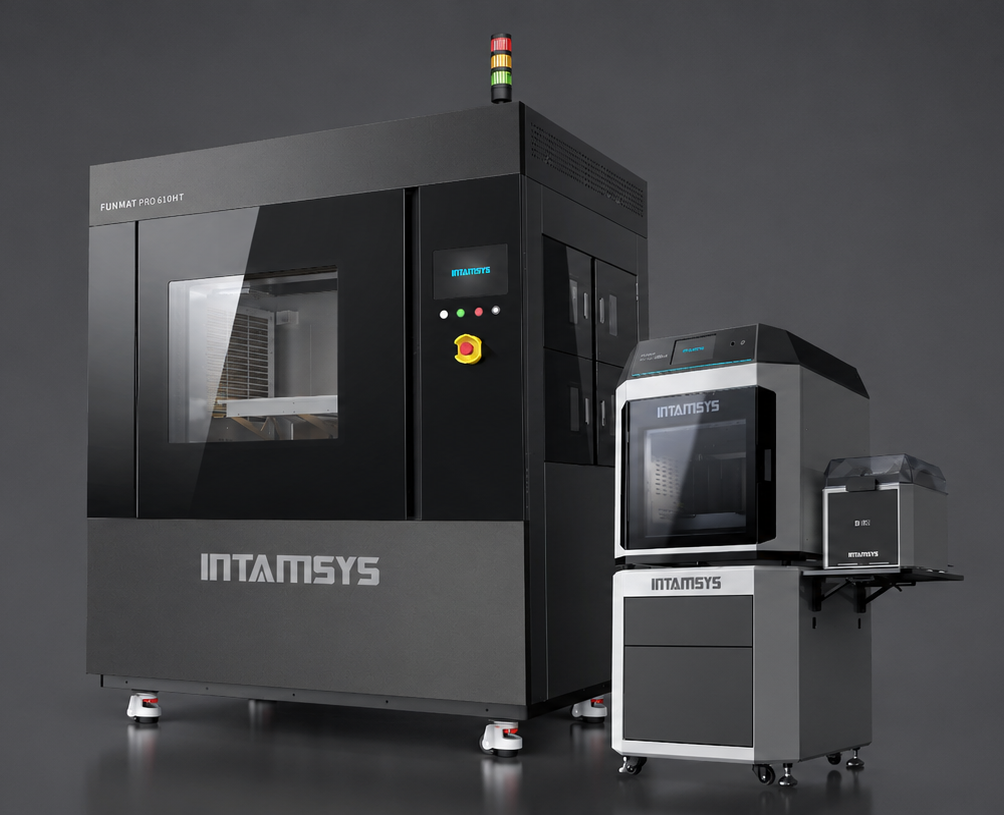
The FUNMAT HT is suited to PEEK material evaluation and functional prototyping. The FUNMAT PRO 410 supports industrial dual-extrusion workflows. The FUNMAT PRO 310 APOLLO is designed for faster, repeatable PAEK production, while the FUNMAT PRO 610HT supports large-format parts and high-temperature full-chamber processes. Final selection should be based on the intended material, part and production requirements.